Dispelling Myths: Lifting won't mess up your shot
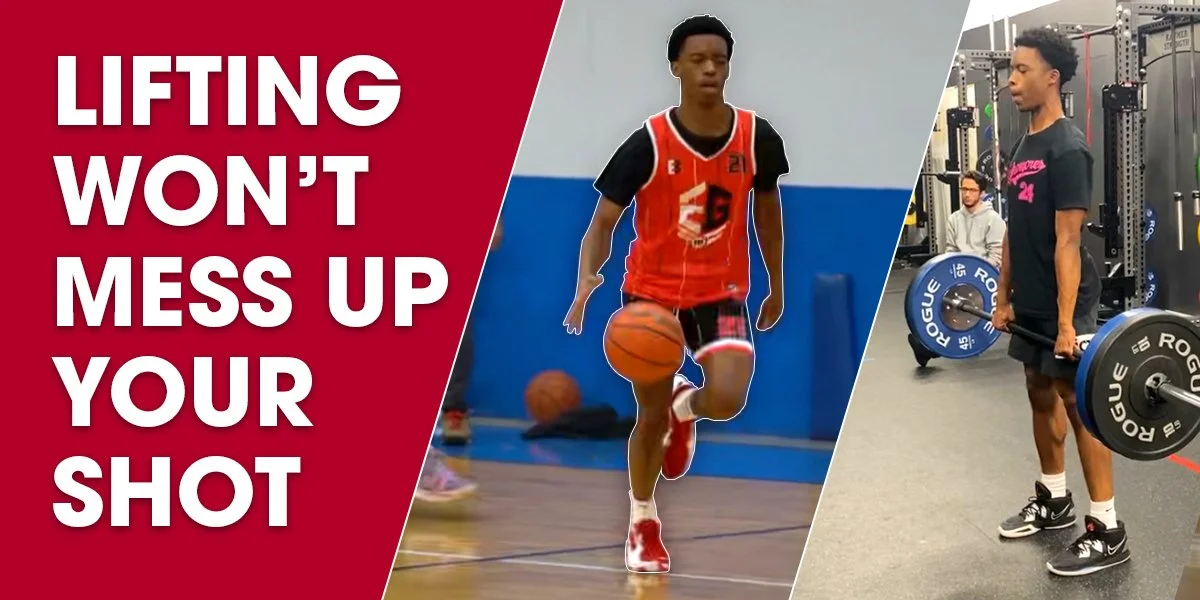
(Left) DJ Greene takes the ball across half court and (Right) completes a deadliift. Follow DJ on twitter.
“Coach, I don’t want to lift in-season. It’s gonna mess up my shot.”
Four years ago when I worked as an assistant strength coach at a local high school, the weight room was divided amongst some of the basketball players. Some of the players were bought in to the process– training hard through the season and making gains in their strength and speed, and increasing their resistance to non-contact injury.
Others were hesitant. They had heard from private instructors or parents that ‘bulking up’ would mess up their shot, throwing off their power and trajectory, or limiting their range of motion to execute a fluid movement. Or, they had experienced soreness post-training and were concerned about that throwing them off in a game.
They did what they could to avoid certain movements, lifting heavy, or handled less than the prescribed volume. Unfortunately, they also missed crucial opportunities to become better athletes in the process.
So let’s dispel this myth. Lifting will not mess up your shot.
Let’s jump right in.
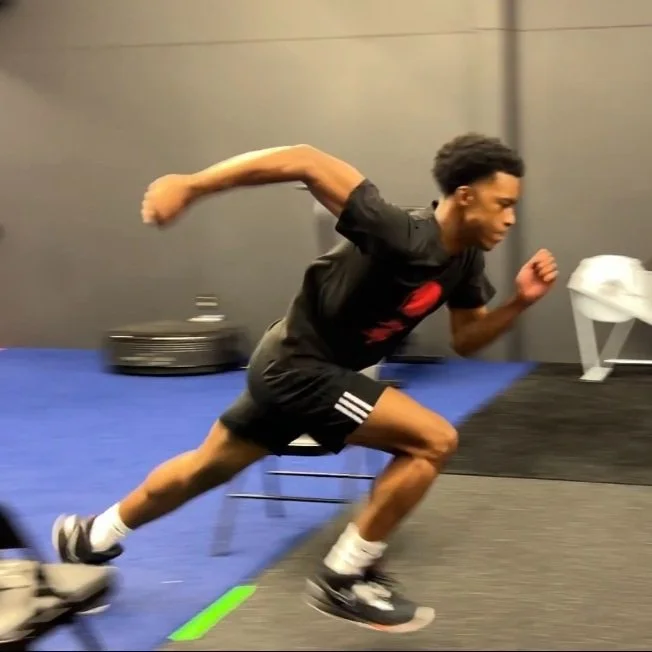
DJ Greene works on his sprint training
Myth #1: Lifting will make a player bulky
Let’s just kill this one really quick. In order to put on muscle that fast, an athlete would need to… train to be a body builder, eat A LOT (and of the right food), and take performance enhancing drugs.
The human body does not put on muscle fast enough to impede mobility naturally, even during puberty when hormones are high.
While athletes may naturally develop the size of their muscles in a strength and conditioning program, it’s the coach’s goal to improve athletic performance, not aesthetics. Plus, athletes should work through full ranges of motion while training, so lifting will not negatively impact joint mobility.
Now, if an athlete stopped playing basketball for a year while they trained, you might see an issue. But that’s not because of training… it’s because of lack of practice.
The Truth:
Keep practicing your game while you train to become stronger and faster. Your body will learn to use that growing strength and speed as you play.
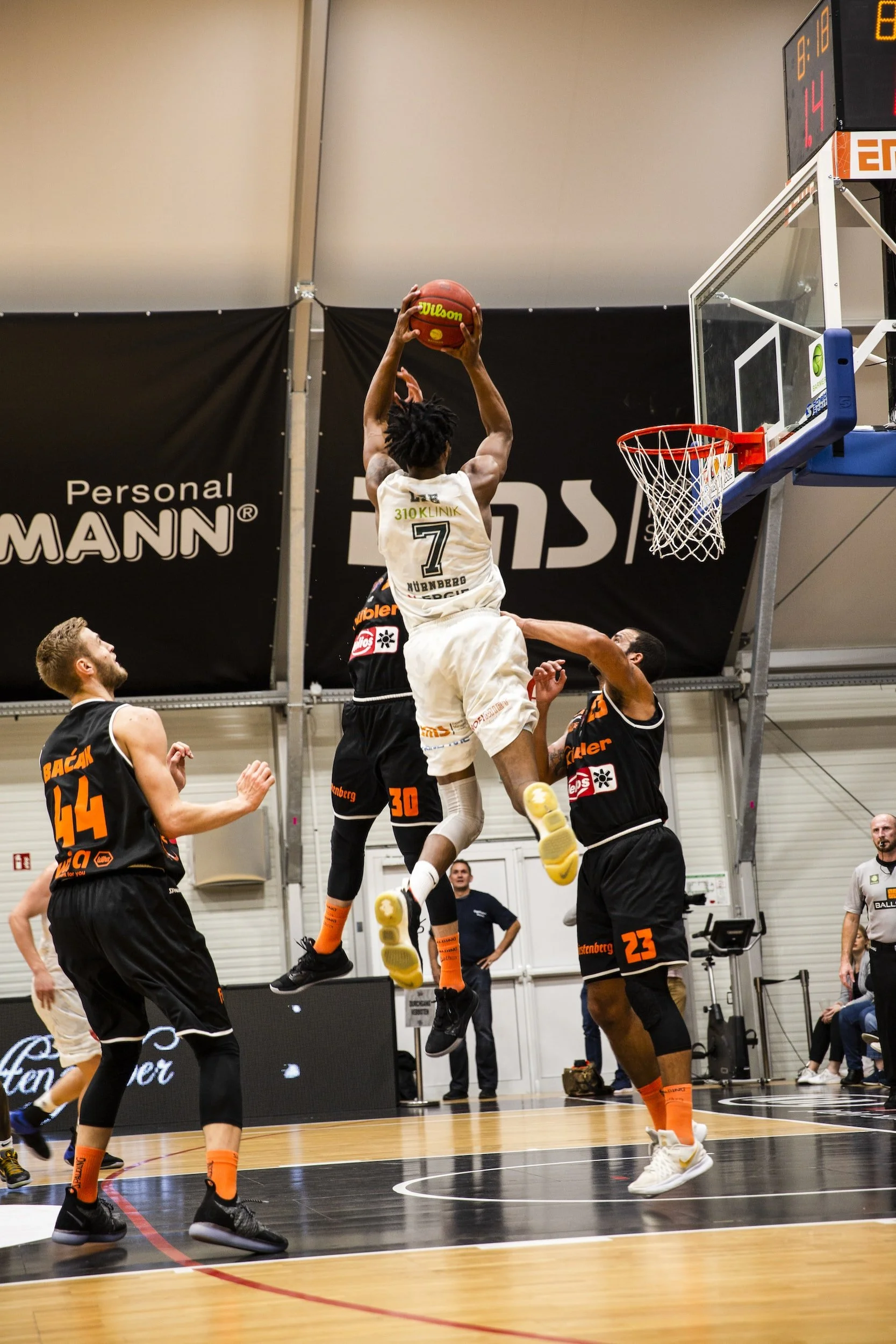
Stock Photo | Credit: Markus Spiske
Myth #2: Lifting will make a player too sore and will disrupt their mechanics
When good coaches design training programs, the goal is not to make athletes sore. In fact, soreness is not necessarily a marker of a good training session, nor always a marker of progress. Especially in-season, strength coaches try to manage volume appropriately to not over tax the body leading up to games.
However, being sore post-workout still happens from time to time. And it’s not always a bad thing. It’s a tangible signal that the muscles are working on repairing themselves and getting stronger.
What causes soreness?
Increase in training volume
Introduction of new movement patterns (aka, learning new things)
Again, it should never be a coach’s goal to make their athletes sore. A good strength coach will prescribe an appropriate volume at the appropriate time to maximize the body’s chances for ideal game play. And while athletes can’t control what is in their program, they can control communication with their coach.
Empowering athletes to advocate
At Raymer Strength, we empower our athletes to advocate for themselves. In a situation where an athlete felt really sore after strength and speed training, they could tell their strength coach how the training session felt and ask (1) what they need to do as an athlete to limit soreness, and (2) if there is any way the coach may be able to take this into account in a future program.
Our athletes regularly give us feedback through our daily surveys where they can mark the muscle groups that feel sore. It gives us a better chance at identifying injuries before they happen, changing programs according to their bodies’ reactions, and offering advice if the pain is a result of sport practice or overuse.
Athletes can do all the communication with all the coaches, but soreness may still happen. There are ways to better prepare your body to handle it fast.
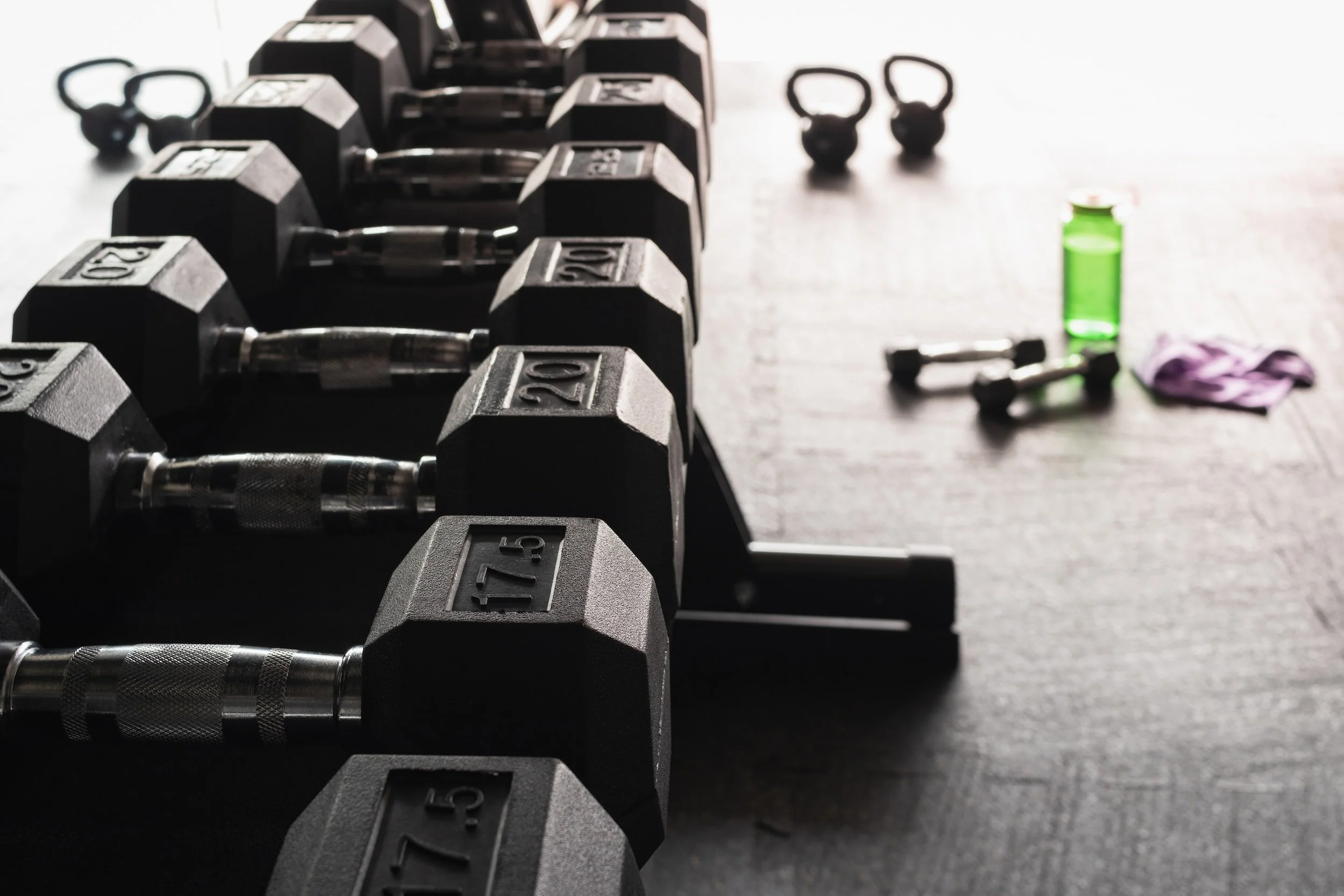
Stock Photo | Credit: Greg Rosenke
Ways athletes can mitigate soreness through maximizing recovery:
Stay hydrated
Focus on good nutrition
Get enough sleep
Increase circulation through active recovery
Adapting to soreness
I talked with one of our former basketball athletes at that local high school to learn more about his approach to lifting during the season. He said he did everything to maximize his recovery through the methods above, and while that helped him recover faster, he still had to become accustomed to shooting with a bit of soreness.
How? He made sure he shoot everyday whether he was sore or not. It was tough doing it for a week, but he adapted and it became “normal” for him. He noticed that the stronger he got through training, the mores shots he was able to put up thanks to his increased muscular endurance. In his words, “it allowed me to feel confident knowing most [basketball] people don’t like to lift in the first place.”
The Truth:
Soreness is not guaranteed, and when it happens, it can be mitigated. Don’t allow it to get in the way of better performance– ADAPT!
Conclusion
Old-school myths should NOT stop athletes from increasing their vertical, their power in the paint, or their speed during fast breaks. If they avoid training out of misplaced fear, athletes will miss out on opportunities to not only get better but also reduce their chance of non-contact injury.
If you want to explore increasing your athletic performance, our coaches would be happy to chat.